
 學(xué)者網(wǎng)












IEEE WORLD CONGRESS ON COMPUTATIONAL INTELLIGENCE (IEEE WCCI 2020)
IEEE CONGRESS ON EVOLUTIONARY COMPUTATION (IEEE CEC 2020)
GLASGOW, UNITED KINGDOM
JULY 19 - 24, 2020
Special Session on Multi-Solution Optimization
Many optimization problems in scientific computing and engineering design have multi-solution nature: there exist more than one combinations of the decision variables that can optimize the objective value. In practice, it is often required to provide diverse optimal solutions to decision makers, which offer additional opportunities such as to introduce hidden user preferences (which may hardly be characterized by mathematic formulation); to support quick alternative actions under emergency events; and to reveal the general properties of the problem. The evolutionary computation technique is particularly suitable to accomplish the multi-solution optimization task, owing to its population-based search nature, strong exploration capability, and high flexibility.
Recently, the research of multi-solution optimization has received considerable attention, mostly regarding the continuous numeric optimization domain, which is widely known as the multimodal optimization. There has also been increasing interest in some new and important topics, such as the multi-solution combinatorial optimization and the real-world applications.
SCOPE AND TOPICS
This special session focuses on both theoretical and practical aspects of multi-solution optimization. The basic techniques include the wide variety of evolutionary algorithms and the niching strategies. We welcome new approaches that are dedicated solve the combinatorial multi-solution optimization problems, such as the multi-solution travelling salesman problem which has a recently released benchmark dataset. Theoretical studies like fitness landscape analysis and solution number approximation are highly encouraged. In addition, we are looking for real-world applications of multi-solution optimization.
Topics of interest include but are not limited to:
§ Niching strategies for evolutionary computation
§ Fitness landscape study
§ Theoretical methods to estimate the number of global optima
§ Benchmark instances and performance measures for multi-solution optimization
§ Continuous multi-solution optimization
§ Combinatorial/discrete multi-solution optimization
§ Multi-solution travelling salesman problem
§ Multi-solution job shop scheduling
§ Constraint handling methods for multi-solution optimization
§ High-dimensional multi-solution optimization
§ Dynamic multi-solution optimization
§ Interactive study between multi-solution optimization and multi-objective optimization
§ Real-world applications of multi-solution optimization, e.g. feature extraction, ensemble learning, data clustering, image segmentation, trajectory planning, robot control, biomedical analysis, electromagnetic design, et al.
RELATED BENCHMARK
|
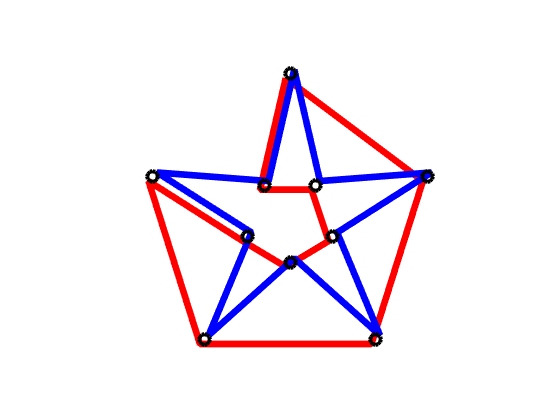
MULTI-SOLUTION TRAVELING SALESMAN PROBLEM (MSTSP)
|
IMPORTANT INFORMATION
Important Dates
§ Paper Submission Deadline: 15 Jan 2020
§ Paper Acceptance Notification Date: 15 Mar 2020
§ Final Paper Submission Deadline: 15 April 2020
Submission Guidelines
Please follow the instructions on the IEEE WCCI 2020 website to prepare your manuscript. When submitting your paper, please select the SS on Multi-Solution Optimization in the main research topics drop-down menu. All papers accepted by the special session are treated the same as regular conference papers, which will be included in the conference proceedings published by IEEE Xplore.
------------------------------------------------------------------------------------------------------------
Website: https://sites.google.com/view/cec-ss-mso/home
Organized by Yue-Jiao Gong (gongyuejiao@gmail.com), Sam Kwong, Jun Zhang



評(píng)論 0